Inflation Impact Calculator
Explore our complete collection of financial calculators including retirement, inflation, CAGR, SIP, and investment planning tools.
Explore More Calculators
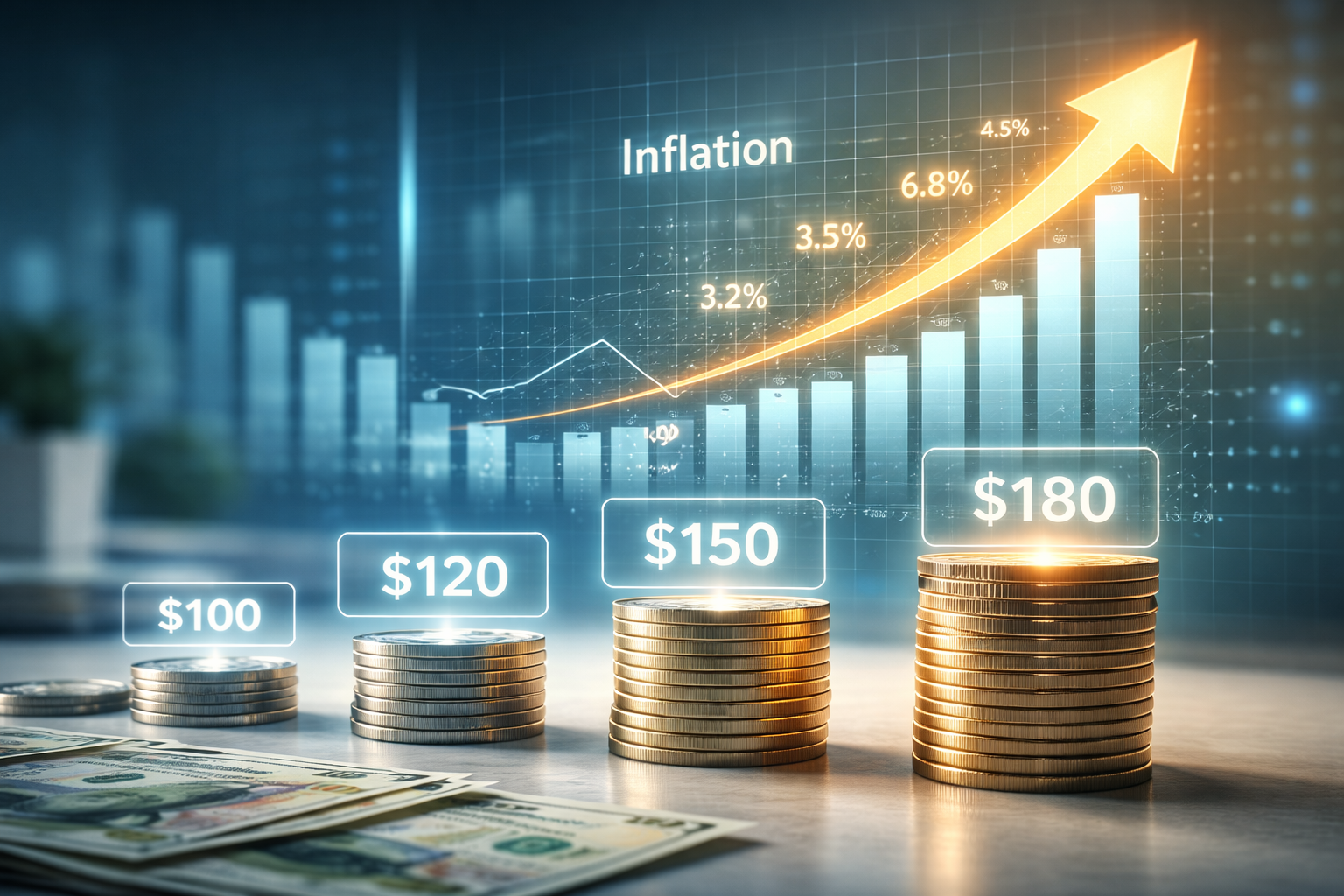
One of the most misunderstood aspects of personal finance is inflation, which has become one of its most potent forces. Each passing year, prices continue to rise and devalue your money. A $100 item can be worth $130, $150, or even more in the future….
We designed the Inflation Impact Calculator as a straightforward and advanced tool to help you understand how inflation damages money over time and what additional resources are necessary in the future for maintaining that lifestyle.
This calculator can help you with a range of financial planning, from retirement savings to housing expenses, education budgeting to investment selection.
Table of Contents
What Is an Inflation Impact Calculator?
An Inflation Impact Calculator estimates the future cost of today’s money after accounting for inflation. It shows:
- How much a current amount will be worth in the future
- How much extra money you will need to maintain purchasing power
- The percentage of value lost over time
- A year-by-year inflation growth breakdown
In simple terms, it answers this question:
“If I have X amount today, how much will I need in the future to buy the same things?”
Why Inflation Matters More Than You Think
Inflation doesn’t feel dramatic on a day-to-day basis. Prices rise slowly, but over long periods, the effect is massive.
Example:
- Annual inflation: 3%
- Time period: 20 years
Something that costs $10,000 today would cost over $18,000 after 20 years.
This means:
- Your savings lose value if they don’t grow
- Cash sitting idle becomes weaker
- Long-term financial goals become more expensive
Ignoring inflation is one of the biggest financial planning mistakes people make.
How This Inflation Impact Calculator Works
The calculator uses a standard compound inflation formula:
Future Value = Present Amount × (1 + Inflation Rate / Compounding Frequency)^(Years × Frequency)
This allows:
- Yearly or monthly compounding
- Flexible inflation rates
- Accurate long-term projections
The tool then calculates:
- Future amount needed
- Real value of today’s money
- Purchasing power loss
- Growth visualization using charts
All calculations run instantly in your browser.
How to Use the Inflation Impact Calculator (Step-by-Step)
Step 1: Enter Amount Today
Type the amount you currently have or spend.
Example:
10000
Step 2: Enter Number of Years
How far into the future you want to calculate.
Example:
15 years
Step 3: Choose Inflation Preset or Custom Rate
You may select a country preset or enter your own rate:
- USA ≈ 3%
- UK ≈ 4%
- EU ≈ 2.5%
- India ≈ 6%
Or enter a custom rate if you prefer.
Step 4: Select Compounding Frequency
Choose:
- Yearly (most common)
- Monthly (more precise)
Step 5: Select Currency
USD, GBP, EUR, INR supported.
Step 6: Click Calculate
You instantly receive:
- Future value required
- Real value of today’s money
- Percentage of purchasing power lost
- Extra money needed
- Line chart visualization
- Year-by-year breakdown table
Example Calculation

Suppose:
- Amount today: $10,000
- Years: 20
- Inflation rate: 3%
Result:
- Future Value Needed: ≈ $18,061
- Purchasing Power Lost: ≈ 45%
- Extra Required: ≈ $8,061
This means your $10,000 will only buy what $5,500 buys today after 20 years.
Understanding the Results
Future Value Needed
Shows how much money you must have in the future to equal today’s purchasing power.
Real Value of Today’s Amount
Shows what today’s money will feel like in future terms.
Purchasing Power Lost
Percentage reduction caused by inflation.
Extra Money Required
Additional amount you must earn or save to keep up with inflation.
How Inflation Works (Simple Explanation)
Inflation occurs when the general price level of goods and services increases across an economy.
Main drivers:
- Increased production costs
- Higher wages
- Supply chain constraints
- Increased demand
- Expansion of money supply
When inflation rises:
- Currency buys fewer goods
- Living costs increase
- Savings lose value
Moderate inflation is normal and even healthy for economic growth, but high or prolonged inflation damages purchasing power.
Inflation vs Interest vs Investment Returns
If your money earns less than inflation → you lose value
If your money earns equal to inflation → you break even
If your money earns more than inflation → you grow wealth
Example:
- Inflation: 3%
- Savings account interest: 1% → Losing 2% yearly
- Investment return: 7% → Gaining 4% real growth
This calculator helps you understand the minimum growth you need to protect your money.
Who Should Use This Calculator?
- Savers
- Investors
- Retirement planners
- Students
- Home buyers
- Financial advisors
- Budget planners
If you deal with money over long timeframes, you need to understand inflation.
Benefits of Using Our Inflation Impact Calculator
- Free & instant
- No registration required
- Works on all devices
- Visual charts
- Country presets
- Accurate compound math
- Privacy friendly (no data stored)
Practical Uses
- Retirement planning
- Salary growth estimation
- Education fund planning
- Investment return comparison
- Cost-of-living forecasting
- Business pricing models
Tips to Beat Inflation
- Invest in diversified assets
- Increase earning skills
- Review savings regularly
- Avoid keeping large idle cash
- Recalculate yearly
Frequently Asked Questions (FAQ)
What is a good inflation rate to use?
Most developed economies average 2%–3%. Use 3% if unsure.
Is this calculator accurate?
It uses standard compound inflation formulas. Accuracy depends on chosen rate.
Does inflation compound monthly or yearly?
Official inflation is yearly, but monthly compounding provides smoother modeling.
Can inflation ever be negative?
Yes, called deflation, but rare and usually short-term.
Is this tool suitable for business planning?
Yes. It is useful for pricing models and cost forecasting.
Does this include taxes?
No. It only measures inflation impact.
Reference Links
- U.S. Bureau of Labor Statistics – Consumer Price Index
https://www.bls.gov/cpi/ - Bank of England Inflation Guide
https://www.bankofengland.co.uk/monetary-policy/inflation - European Central Bank – Inflation
https://www.ecb.europa.eu/ecb/tasks/monetarypolicy/inflation/html/index.en.html - World Bank Inflation Data
https://data.worldbank.org/indicator/FP.CPI.TOTL.ZG - Investopedia – Inflation Definition
https://www.investopedia.com/terms/i/inflation.asp
Disclaimer
This Inflation Impact Calculator provides estimates based on user-supplied inputs and standard economic formulas. It is intended for educational and informational purposes only and does not constitute financial, investment, or tax advice. Actual inflation rates vary over time and by region. Always consult a qualified financial professional before making financial decisions.